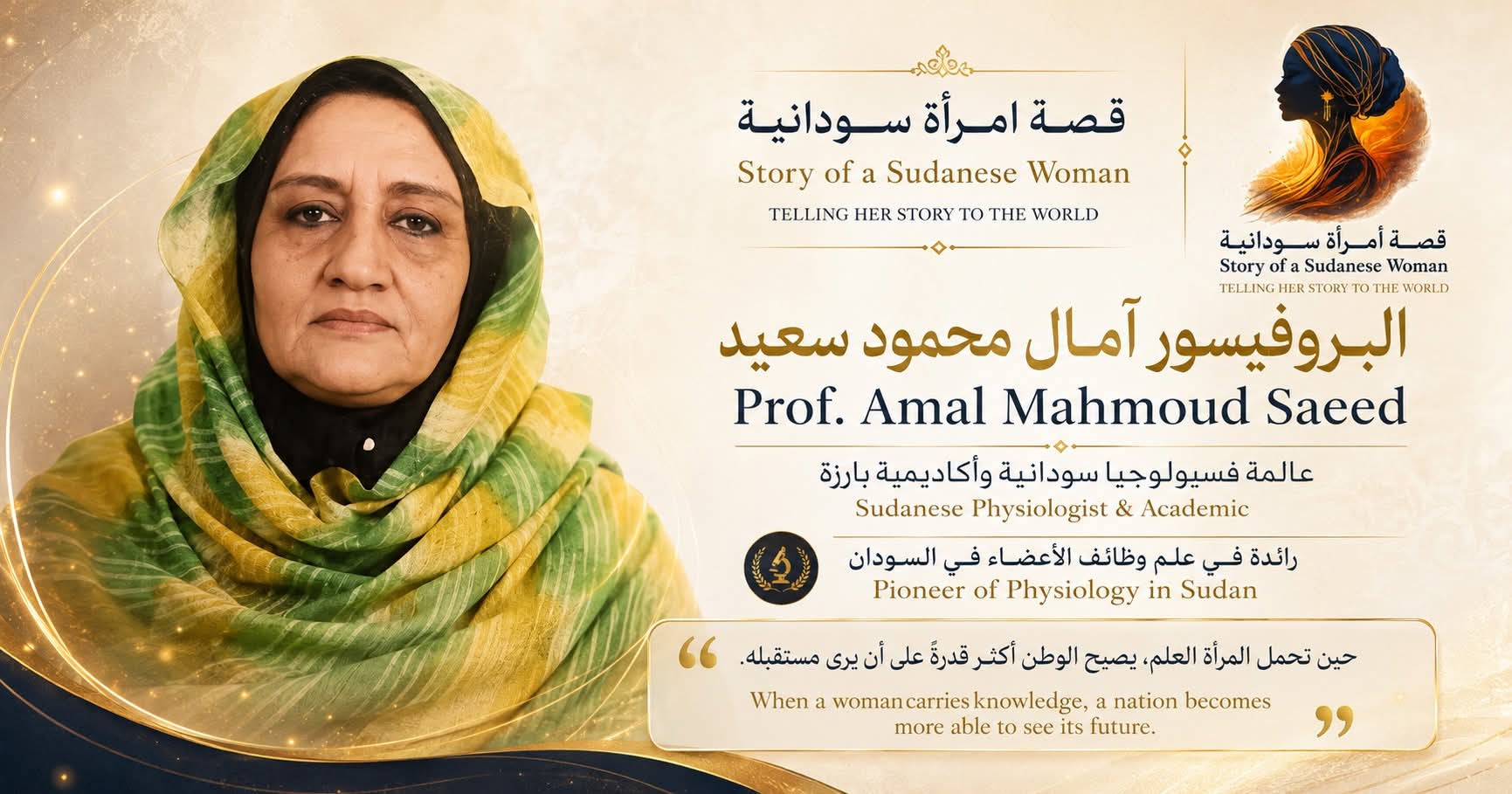
تُعد البروفيسور آمال محمود سعيد واحدة من القامات العلمية السودانية البارزة في مجال علم وظائف الأعضاء/الفسيولوجيا، واسمًا ارتبط بتأسيس وتطوير هذا الحقل داخل السودان وخارجه. فهي ليست فقط أستاذة جامعية وباحثة، بل واحدة من النساء السودانيات اللواتي صنعن حضورًا علميًا رفيعًا في مجال دقيق، ورفعن اسم السودان في محافل علمية إقليمية ودولية.
تعمل البروفيسور آمال محمود سعيد أستاذةً لعلم وظائف الأعضاء بكلية الطب في جامعة الخرطوم، وورد اسمها في مواقع علمية وبحثية بوصفها باحثة في الفسيولوجيا وأستاذة جامعية في هذا المجال. كما ارتبطت أبحاثها وتعليمها الطبي بجامعة الخرطوم، وشاركت في أعمال بحثية منشورة في مجال التعليم الطبي والفسيولوجيا.
ومن أبرز محطات مسيرتها العلمية أنها كانت من مؤسسي الجمعية السودانية لعلم وظائف الأعضاء التي تأسست في 4 أبريل 1994، إلى جانب عدد من أساتذة الفسيولوجيا في السودان. وتذكر الجمعية السودانية لعلم وظائف الأعضاء أن البروفيسور آمال محمود سعيد كانت أول رئيسة للجمعية، وتصفها بأنها “أم الفسيولوجيا في السودان”، وهو وصف يعكس مكانتها العلمية والتأسيسية في هذا المجال.
لم يقتصر أثرها على السودان فقط؛ فقد تولت رئاسة الجمعية الأفريقية للعلوم الفسيولوجية خلال الفترة من 2008 إلى 2016، بما جعل حضورها جزءًا من تطور هذا الحقل على مستوى القارة الأفريقية. كما وردت ضمن اللجنة التنفيذية للجمعية السودانية لعلم وظائف الأعضاء بوصفها رئيسة للجمعية وأستاذة فسيولوجيا بكلية الطب في جامعة الخرطوم.
وفي عام 2021، حظيت البروفيسور آمال محمود سعيد بتكريم علمي مهم بعد اختيارها عضوًا في أكاديمية الاتحاد الدولي للعلوم الفسيولوجية IUPS Academy of Physiology ضمن 30 عالمًا في الفسيولوجيا من مختلف أنحاء العالم. وذكرت جامعة الخرطوم ووكالة السودان للأنباء أن اختيارها جاء تقديرًا لإسهاماتها العلمية في البحث والتدريس وخدمة الصحة، كما أشارت تقارير سودانية إلى أنها احتلت موقعًا متقدمًا عالميًا، والأول عربيًا وأفريقيًا في ذلك الاختيار.
وتكشف سيرتها أيضًا عن اهتمام عميق بتطوير التعليم الطبي، لا بالبحث العلمي وحده. فقد شاركت في دراسة منشورة عام 2019 حول مقارنة فعالية المحاضرات القائمة على المشكلات بالمحاضرات التقليدية في تدريس الفسيولوجيا في السودان، وهو موضوع يعكس انشغالها بتجويد طرق التعليم الطبي وتطوير بيئة التعلم لطلاب الطب.
كما تظهر مساهمتها البحثية في مجالات صحية أخرى، منها مشاركتها ضمن فريق بحثي في دراسة حول تأثير الصمغ العربي على مؤشرات الالتهاب ومضادات الأكسدة لدى مرضى الغسيل الكلوي، وهي دراسة منشورة عام 2020، وتُظهر امتداد اهتمامها العلمي إلى موضوعات تتصل بالصحة العامة والبحث التطبيقي.
وتشير مصادر أخرى إلى أنها شغلت مواقع أكاديمية وإدارية مهمة، من بينها رئاسة قسم الفسيولوجيا بكلية الطب في جامعة الخرطوم خلال الفترة 1996–2004، ومنصب نائب عميد كلية الدراسات العليا للعلوم الطبية والصحية 2003–2006، ومديرة مركز تطوير التعليم للمهن الصحية 2006–2008، وهي محطات توضّح دورها في بناء المؤسسات الأكاديمية، وليس فقط في إنتاج البحث العلمي.
إن سيرة البروفيسور آمال محمود سعيد هي سيرة امرأة سودانية اختارت طريق العلم الصعب، وصعدت فيه بثبات حتى أصبحت اسمًا مرجعيًا في الفسيولوجيا. امرأة جمعت بين الأستاذية، والبحث، والإدارة الأكاديمية، والقيادة العلمية، وأسهمت في إعداد أجيال من الأطباء والباحثين داخل السودان وخارجه.
في مسيرتها، نرى وجهًا مضيئًا للمرأة السودانية في العلوم: المرأة التي لا تكتفي بالحضور، بل تؤسس، وتقود، وتعلّم، وتبحث، وتمثل بلدها وقارتها في المحافل الدولية.
البروفيسور آمال محمود سعيد… عالمة سودانية جعلت من الفسيولوجيا علمًا يُدرَّس، ومؤسسةً تُبنى، وذاكرةً علمية يفاخر بها السودان.
من منصة قصة امرأة سودانية، نبعث بالتحية والتقدير إلى البروفيسور آمال محمود سعيد، العالمة السودانية التي رفعت اسم السودان في ميدان علم وظائف الأعضاء، وجعلت من البحث والتدريس والقيادة العلمية طريقًا لخدمة المعرفة والإنسان.
نحتفي بها بوصفها واحدة من النساء السودانيات اللواتي أثبتن أن العلم ليس مجرد شهادات ومناصب، بل أثرٌ يبقى في الطلاب، وفي الجامعات، وفي المؤسسات، وفي ذاكرة الوطن.
في سيرة البروفيسور آمال محمود سعيد، نرى صورة المرأة السودانية العالمة: امرأة تؤسس جمعية علمية، تقود حقلًا معرفيًا، تشارك في البحث العالمي، وتفتح الطريق لأجيال من الأطباء والباحثين كي يتعلموا أن العلم مسؤولية وكرامة وخدمة.
إن اختيارها ضمن أكاديمية الاتحاد الدولي للعلوم الفسيولوجية لم يكن تكريمًا فرديًا فقط، بل كان لحظة فخر للسودان، وللنساء السودانيات، ولكل من يؤمن بأن المرأة السودانية قادرة على أن تكون في مقدمة الصفوف العلمية العالمية.
من قصة امرأة سودانية، نرى في مسيرتها درسًا في الصبر العلمي، والانضباط الأكاديمي، والقيادة الهادئة التي لا تصنع ضجيجًا، لكنها تترك أثرًا عميقًا في العقول والمؤسسات.
كل التقدير للبروفيسور آمال محمود سعيد، العالمة التي جعلت من المعرفة نورًا، ومن الفسيولوجيا بابًا لخدمة الصحة والتعليم والبحث.
البروفيسور آمال محمود سعيد… حين تحمل المرأة العلم، يصبح الوطن أكثر قدرةً على أن يرى مستقبله.
Professor Amal Mahmoud Saeed
Sudanese physiologist, Professor at the Faculty of Medicine — University of Khartoum, and a pioneering figure in physiological sciences in Sudan and Africa.
Professor Amal Mahmoud Saeed is one of Sudan’s leading scientific figures in the field of physiology. Her name is closely associated with the development of physiological sciences in Sudan, as well as with academic leadership, medical education, and regional scientific contribution.
She is a Professor of Physiology at the Faculty of Medicine, University of Khartoum, and her name appears in published research and academic records connected to physiology and medical education in Sudan.
One of the major milestones in her career is her role in the foundation of the Sudanese Physiological Society, established on 4 April 1994 by a group of eminent Sudanese professors. The Society identifies Professor Amal Mahmoud Saeed as its first President and describes her as the “Mother of Physiology in Sudan,” reflecting her foundational role in the field.
Her influence extended beyond Sudan. She served as President of the African Association of Physiological Sciences from 2008 to 2016, contributing to the advancement of physiology across the African continent. She is also listed by the Sudanese Physiological Society as its President and as Professor of Physiology at the University of Khartoum.
In 2021, Professor Amal Mahmoud Saeed was honored after being selected as a member of the International Union of Physiological Sciences Academy of Physiology, among 30 physiologists from around the world. Reports from Sudan noted that the selection recognized her scientific contributions in research and teaching, and represented a moment of pride for Sudanese science and Sudanese women.
Her work also reflects a strong commitment to improving medical education. She was a co-author of a 2019 study comparing problem-based lectures with traditional lectures in physiology teaching in Sudan, highlighting her interest in developing effective teaching methods for medical students.
Her research contribution extends into applied health fields as well. She was among the authors of a 2020 study on the effects of gum Arabic on antioxidant capacity and C-reactive protein among haemodialysis patients, showing the breadth of her scientific engagement.
Sources also note that she held several important academic and administrative roles, including Head of the Physiology Department at the Faculty of Medicine, University of Khartoum from 1996 to 2004, Vice Dean of the Graduate College for Postgraduate Medical Health Sciences from 2003 to 2006, and Director of the Educational Development Centre for Health Professions from 2006 to 2008.
Professor Amal Mahmoud Saeed’s story is the story of a Sudanese woman who chose the demanding path of science and walked it with discipline, vision, and dedication. She contributed not only through research, but also through teaching, institution-building, and scientific leadership.
Professor Amal Mahmoud Saeed — a Sudanese scientist who turned physiology into a field of teaching, research, leadership, and national pride.
From Story of a Sudanese Woman, we extend our deep respect and appreciation to Professor Amal Mahmoud Saeed, a Sudanese scientist who raised Sudan’s name in the field of physiological sciences and made research, teaching, and scientific leadership a path of service.
We celebrate her as one of the Sudanese women who proved that science is not only about degrees and titles, but about lasting impact — in students, universities, institutions, and national memory.
In Professor Amal Mahmoud Saeed’s journey, we see the image of the Sudanese woman scientist: a woman who helped establish a scientific society, led a knowledge field, contributed to global research, and opened doors for generations of doctors, researchers, and academics.
Her selection to the International Union of Physiological Sciences Academy was not only an individual honor; it was a proud moment for Sudan, for Sudanese women, and for everyone who believes that Sudanese women belong in the highest spaces of global science.
At Story of a Sudanese Woman, we see in her career a lesson in scientific patience, academic discipline, and quiet leadership — the kind of leadership that may not seek noise, but leaves a deep mark on minds and institutions.
With deep appreciation, we honor Professor Amal Mahmoud Saeed, a scientist who made knowledge a light, and physiology a doorway to health, education, and research.
Professor Amal Mahmoud Saeed — when a woman carries knowledge, a nation becomes more able to see its future.
#قصة_امرأة_سودانية
#آمال_محمود_سعيد
#البروفيسور_آمال_محمود_سعيد
#المرأة_السودانية
#نساء_السودان
#سودانيات_ملهمات
#عالمات_سودانيات
#نساء_في_العلوم
#علم_وظائف_الأعضاء
#الفسيولوجيا
#جامعة_الخرطوم
#كلية_الطب
#الجمعية_السودانية_لعلم_وظائف_الأعضاء
#البحث_العلمي
#التعليم_الطبي
#ذاكرة_السودان
#توثيق_المرأة_السودانية
#StoryOfASudaneseWoman
#AmalMahmoudSaeed
#ProfessorAmalMahmoudSaeed
#SudaneseWomen
#WomenOfSudan
#SudaneseWomenInScience
#SudaneseScientists
#WomenInScience
#Physiology
#PhysiologicalSciences
#UniversityOfKhartoum
#FacultyOfMedicine
#SudanesePhysiologicalSociety
#MedicalEducation
#ScientificResearch
#SudanMemory
#DocumentingSudaneseWomen